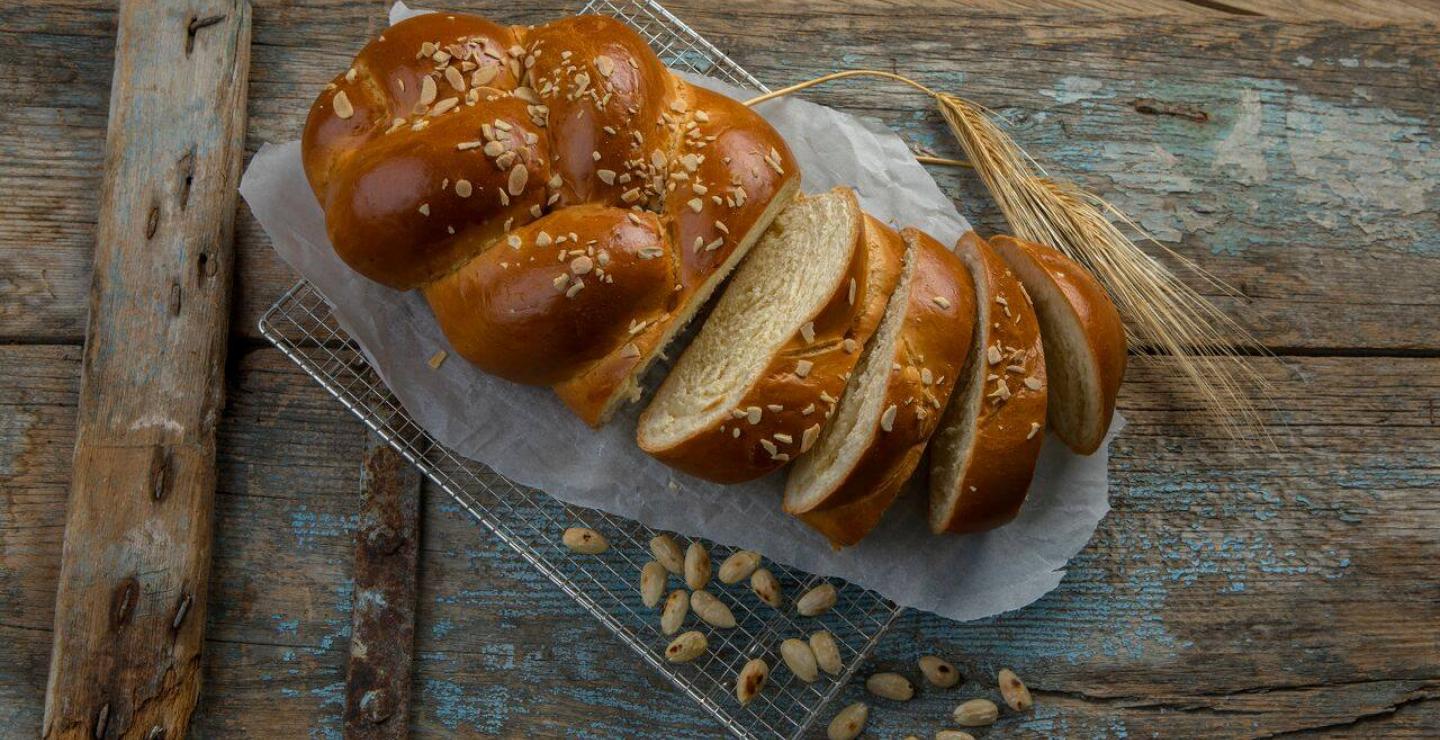
Easter is special. It has a variety of different foods and recipes that are available on the table and made just for that day. One of them is the traditional easter bread that in Greek is called, Tsoureki
(more…)Category: easter
-

Reasons to visit Greece: As being told by tourist/expats
Because of my profession i spent a lot of time online scanning through the internet and looking about …more or less everything that i need at that time. It gave me great pleasure to read a post in quora.com on the impressions of tourists for Greece.
Quora is a question-and-answer site where questions are asked, answered, edited, and organized by its community of users. Basically you can go and ask more or less anything you want and people from the community will come back with an answer. Hopefully correct!
So even if it biased from each ones experiences it gives us a nice insight on what Greece could give you if you decide to spend some days there. Some of the answers provided are huge and will not post all of them over here but will try to focus on some parts.
Samuel Chan is from California and he has been to Greece 5 times as he is working for a company founded by a Greek and half of the team is based out of Greece. Here is what he thinks about Athens.
“Since the majority of my time here in Greece is spent in Athens, I’ll share some of my impressions of this city too.Athens is huge. Over 3.5 million people live here, but it never feels crowded or like you’re in such a big city. If you go up to the Acropolis or another place that overlooks Athens, you’ll understand the true scale of the city. Houses go as far as your eyes can see in every direction.

Athens feels rather different than other European cities I’ve been to (Copenhagen, Paris, Zurich). It’s got a long history and certainly feels a bit aged (I mean, one of the oldest and most beautiful buildings in the world stands here!). Houses, which usually have 6-12 apartments inside, tend to be slightly plain and boxy. But the apartments themselves were spacious and comfortable; all had balconies that overlooked the street outside.
The first thing my co-worker and friend told me when I arrived in Athens was that cars have right-of-way over pedestrians. I chuckled, but it’s a true statement. Streets, particularly those in residential areas, are narrower than American roads, and cars can go pretty fast, so you have to be cautious and patient when crossing a road.
As big as Athens is, it has a convenient public transportation system that was quite easy to understand. I can hop on the train/metro and get from the eastern side of Athens (in Iraklio) to the Piraeus port in 45 minutes for 1.40 Euros. Most metros are colorfully covered by graffiti, making each one a unique piece of art.
Taxis are also quite cheap (compared to the US). A ~25 minute ride cost 9 Euros.
After walking and taking the metro everywhere, I dread having to drive everywhere once I return home.
If you ever spend a night in Athens, you’ll find that it’s a city that never sleeps. The first time I was in Athens, I was jet lagged and could hear cars constantly driving through a main street at 3 and 4am. I’ve also gone out with friends and stayed out till 6 am.
Athens is quite safe too. I’ve walked alone at 2am and had no issues (I’d probably never try this at home.)”
Not sure how safe is walking alone at 2 am in California but i would agree with his view on Athens (of course i would i am from Athens…) . Either way, after living in London for more than 10 years i have to say that Athens and Greece is mostly portrayed badly in the media whenever there is a protest or any political riot. The 8 years of depression hasnt helped either. Nevertheless, you very rarely see or hear attacks in tourists or fights breaking up like -for example- every Friday night in central London.

Obviously, in there we have also some comments of people that love Greece but in the same time reveal some of our negative aspects of our character. Bob Harnet, is married to a Greek and talks about it in more detail .
“Greece is a great place to visit, the weather is consistent and the people are quite friendly. There is a better than average use of English in Greece (for tourists) than other countries I have visited but less than more developed countries. The Greeks have possibly the worst public toilets in the Western world, seriously guys, sort it out, this includes bars/restaurants/etc.
Greek food is pretty universally acceptable and quite diverse. Greeks may not understand vegetarians but there is enough diversity of food on the menu to satisfy, more than many other countries. The food is rarely refined which is a shame not to have much choice in venues, it is mostly either souvalki/gyros or taverna/ouzeria. The quality of food is nearly always good.
Lounge bars are great, much missed in other countries. Just chill with a drink and some good music.
Greeks take almost no pride in architecture, history perhaps but anything newer than 1000 years old is happily neglected, then knocked down and replaced with a concrete apartment block. There are some fabulous old buildings around Greece I am slowly watching crumble away. I wish there was some heritage charity in Greece looking to save these forgotten gems. (This excludes tourist areas that get preserved not for their merit but because they bring tourists).
Greeks assume someone else is responsible for everything and nothing is within their power. Corruption, graffiti, infrastructure? When government fails the people should step up and do it, not just complain and vote in another useless group.”
I would definitely agree with him on the architecture part. Unfortunately, Greece (and especially Athens) has grown tremendously in the past few years which had a huge negative result in the buildings and the life of Greeks. A lot of things should be done on that but not sure how to start.
As far as the last paragraph , i would say it is a bit more complex.
Tamas Remenyfy, wrote 5 reasons why you should visit Greece.
1. Beaches. Greece has the longest coastline in Europe (more than 13 thousand kilometres), therefore you can choose from thousands of beautiful beaches with crystal clear water.

2. The weather in Greece is ideal for a summer holiday.
3. The prices are relatively cheap compared to other southern European countries such as Italy or Spain.
4. Greek mediterranean cuisine is nice and healthy, greek salad, fish dishes, grilled meats etc. If you are a lover of blue sea and sunshine, Greece is definitely a great vacation spot for you.
5. Last but not least Greece offers great historical sites to visit.

On the other hand Ashwini Mina, focused on our driving skills and on our taste of…art. “The average driver in
Greece can easily out-beat the best in the rest of the world. The reason is the huge traffic which requires exceptional parallel parking skills. Add a humongous bunch of traffic signals to the situation and it was a bit of chaos….
The streets were littered with Graffiti – Some were negative messages because of the economy. There was also a lot of police presence on the roads.Overall, it’s a beautiful country and definitely plan to visit again.”
I cant say the comments are bad, or wrong but it is the opinion that is portrayed online. Sometimes this opinion has be defined by personal opinion and some others because of the news. Either way, it is good to have it in mind. Closing i fight quite positive that even if some negatives of our character as Greeks were portrayed (which is normal) almost all of them talked about how they would visit Greece again.
Last statement from Alan Cowperthwaite.

souvlaki “Greeks are noisy, friendly and incredibly hospitable. For example someone I had spoken to on a professional level found I was flying to Greece, phoned me and insisted he would meet me at the airport and stay with him. We had never met before! My parents were driving in Crete in the mountains when people stopped the car, explained that there was a wedding and insisted they come as guests. I had stopped in a little town to get something from a shop and a man with a big silver platter followed me in and insisted I had some of the food. ( I think it was an occasion that takes place 30 days after a funeral). If you are a stranger, you are a guest, the word is the same, Xenos.
-

5 Customs you can experience in Greece during Easter
During Easter, events and Christian customs take place to celebrate Easter, the most important celebration of Christianity all over Greece. Have you wondered how it is celebrated in different regions of Greece? There are some very special customs that you will meet in different parts of the country. In this post I stand out a few and present them to you.
The celebration take place this year on Sunday 8th of April.
-

A walk in Varvakios Market in Greece
Last new years astve i decided to have a go at the main center of Athens in the morning in order to have a chance to get my last presents. Walking up and down in Athens i ended up walking inside the biggest food market in Athens. The Varvakios market.
Varvakeios Agora – the biggest market area in one locale in Greece – is one of the city’s landmarks and known all over as a ‘’must visit’’ for the best meats, fish, fruit, vegetables, herbs and spices. The market is referred to as the Municipal or Central Market of Athens or, as the locals would say, the Kentriki Agora, and of course the Varvakeios Agora as most people know it.
Historical Background
Designed by the architect Ioannis Koumelis the Varvakeios was built between 1876 and 1886 and replaced a previous unsightly arrangement of wooden sheds and flimsy structures, which had served as public market before. Even a huge fire in 1884 did not stop the project. Named after one of Greece’s national heroes, Ioannis Varvakis who lived between 1745 and 1825 and is remembered to this day for his part in helping Greece gain independence from their Ottoman rulers; the market draws visitors from all over. The complex underwent extensive renovations during the period 1979 – 1996 and today houses more than 70 shops under the covered area alone. Apart from the meat, fish and fresh produce counters to peruse, sit down at some coffee shops, restaurants, fast food outlets and little tavernas. Ask for patsas (made from pork stomach) to get rid of a hangover or too much rich food after a heavy night out!
Where to Find the Market
Situated on Athinas Street and adjacent roads such as Evripidou, Eolou and Asophocleous Streets in the heart of the city between Omonia and Monastiraki Squares, the market is easy to reach. It is within walking distance of the City Hall and the well-known Kotzia Square which many tourists find very convenient as quite a number of hotels are situated nearby.
Opening Hours
The market is open between 7am and 6pm every day, including Saturdays, but closed on Sundays. The only exception is Easter, Christmas, Clean Monday and other important holiday festivals when Greeks follow a special diet. During those festivals the market may stay open longer and also operate on Sundays.
Value for Money
The younger set may prefer to buy their food in modern supermarkets; however, those above 40 generally understand where to find the best value, which is in the halls and aisles of the Varvakeios Agora. Meat, fish, fruit and vegetables are fresh and you can handpick what you like. Prices are better than those you find in modern supermarkets. The real value is probably found in the fact that you have a huge variety, that you can compare prices and be sure of absolute freshness before you buy. If restaurant owners shop here, so should you!
Like all big cities, Athens and shopping are best experienced when you shop where the locals shop – yes, often you find the heart of the city and its culture where the locals go to buy their fresh fish, meats and produce. The Varvakeios Agora is an excellent example.

The Fish Market
Since fish forms an important part of the Mediterranean diet, it should come as no surprise that the Varvakeios Fish Market serves up to 5,000 customers every day; the fish market alone employs more than 400 staff members that handle as much as 10 tons per day. The choice is great – from bream, cod, mackerel, sardines, swordfish, sole and monkfish to anchovy and more. It seems the list is endless. In fact, you will find almost any fish the Aegean Sea has to offer.

Varvakios Meat Market
This section is found next to the fish market – it surrounds the fish market on 3 sides – and has an amazing choice of beef, pork, goat, lamb, chicken, livers, kidney and sometimes rabbit. Some fresh, and some cured – the latter perfect as gifts. People come over here before easter to get ingredients for the easter soup, magiritsa or before christmas to prepare the traditional dinner.
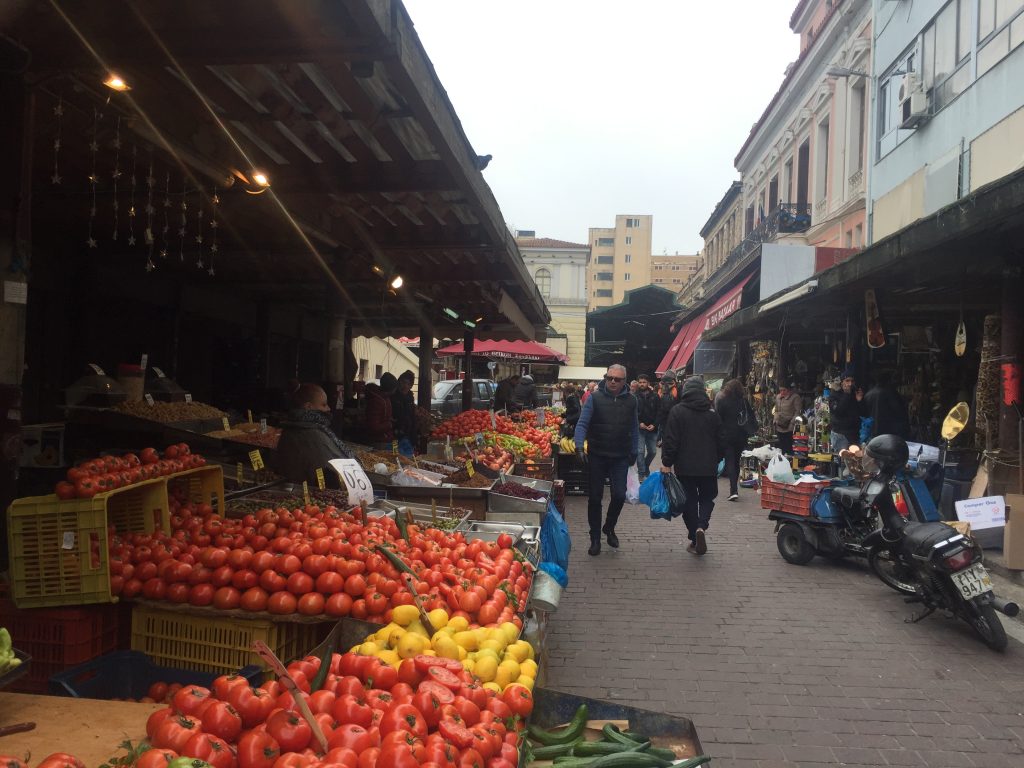
Vegetables and the Spices market
Fruit and Vegetables Opposite the meat and fish markets you will find the freshest produce imaginable: peaches, lemons, grapes, oranges and prunes, amongst choices. Look out for every vegetable your heart desires: a variety of pumpkins, cauliflower, broccoli, and potatoes. You name it, it’s there.
Olives and Spices Olives are very popular and easy to find in Greece. The Varvakeios Agora is no exception, and every variety imaginable is to be found in the market. Most storeowners will allow you to sample their olives before you buy. Spices and nuts are on display in the Evripidou Street area, as are raisins, dates, berries and a variety of dried fruits.
Some Valuable Tips
* To get the most out of your Varvakeios Agora experience, make sure you’re not in a hurry. Take your time and, apart from visiting the fresh food stores and counters, browse through various stores that sell canned and bottled products too.
* To avoid a typical buyer’s rush, try and visit the market between 10 am and 1 pm. That way you can be sure of having the best options AND fresh produce at hand since all stores will be open and the choices will be great.
* As for transport: rather than use a private car or taxi – which can get caught up in the city’s terrible congestion – consider the metro service and other modes of transportation such as one of the various bus lines. You don’t have to worry about parking, which is not only hard to find, but also very expensive.
* It is best to wear shoes and not flip-flops as the floors may be damp or wet.
* If you are prepared to wait until later in the day, prices are likely to drop as vendors want to be sure to sell all their products.
* Gifts – tourists have a wonderful choice of canned sardines, meats, spices, olives, cheeses and dried fruits to take home with them.
As one of the outstanding landmarks in Athens, the Varvakeios Agora has been bringing food to the public – locals as well as visitors – for almost 150 years. Its popularity as culinary destination can’t be questioned.
-

Traditional “Kokoretsi” recipe from Greece
Well, if you are Greek and reading this blog, you will know that the following recipe for kokoretsi is one of the most famous in the country during Easter and something that you dont easily do, unless for a celebration.
Nevertheless, it is something that you can find in some Greek taverns during the year and i think deserves its place in every greek food blog!
Some people prefer it as a starter, some others as a main meal, it doesn’t make a difference to me…it still tastes the same 🙂 In Greece where i was this year for Easter was our main dish along side our lamb. Traditional it is cooked the first day of Easter and after Greeks orthodox, have come from the church the previous day and tried magiritsa, the traditional easter soup.
One of the main reasons you will not find it in any other country of the European union is because the main ingredients are the internal organs of the lamb, heart, liver, lungs and kidneys wrapped in seasoned offals.

Sliced and Ready As offal’s (in Greek: Sikotaria) are not allowed in the countries of EU (at least in the UK as far as i know) your only chance is to visit Greece , Turkey or some of the Balkan countries. I am not a doctor to judge whether it is safe or not….but my grandfather was eating that almost every year for the past 91 years of his life and i think he had also one again this year, so it cant be so bad!
The basic idea is that you put in a long skewer all the organs one after the other and you cover them with offals.
The offals “protect” them from the heat in a way as the organs inside are cooked on there own liquids. When the offals become brown and cooked then it is ready.
I am not sure in how many countries can you really cook it as finding the ingredients can be really difficult but if you do find the chance to spend some days in Greece or Turkey be sure to try it…. Many people thought it was disgusting in the beginning but many people loved it in the end…
INGREDIENTS FOR KOKORETSI
- 4 kilos of lamb internal organs, including liver, heart, lungs and kidneys
- 5 kilos of Offals to wrap it
HOW TO MAKE KOKORETSI
- We are washing really well all the meat and intestines that we are going to use for the inside part of kokoretsi while in the same time we cut the pieces in small-medium size pieces. More or less the size of an egg.
- Washing the intestines is the most difficult and tiring part of the process.
- After we wash them all really good we turn them, inside out in order to clean also the internal ones. There are many ways to do that but the most usual is the method of the needle. Simple, you take a needle, tie it up one place and then push it on the inside of the intestine until it comes up from the other side.
- If you don’t start the preparation in the same day, the clean intestines should be kept in a pot with water and vinegar.
- In another pot, you add the pieces of meat (sikotaria) and you start the seasoning.
- Hit in a blender 3-4 cloves of garlic with 1 spoon of olive oil.
- Add Salt in the sikotaria and oregano but not too much.
- Now add the garlic and stir so all the ingredients go everywhere.
Let it relax for an hour or so. . - Now its time to pass everything in the spit or the “beloniasma” as it called in Greek. You need to add in turns, hearts, liver, bolia and additional intestines you might have making sure that they are really close one another without being in the same time really tight.
- When you do that then you need to cover all the parts with the intestines. So you get the point, the hearts,liver etc will be inside protected from the fire and the intestines will cover them on the outside.
- What you wan to do is take one long intestine and tie it up on the bottom side of the spit and slowly pass it round the spit until the upper side where we will have to tie them up again.
- We repeat the same procedure going up and down making sure that we cover as much as possible all sides.
- As we go on we will notice that some pieces of meat will be poping out of the intestines. We need to make every effort to cover them too.
- When we finish with it we need to leave it standing for at least 2-3 hours in order that any liquds are removed from the meat. I remember my father and my grandfather leaving it in the previous night but it depends if you have time to do it.
- You need to have prepared a proper fire to cook it and that is really important as from that the amount of time for the cooking Depending on the size of kokoretsi and the fire you are looking at around 2.5 -3.5 hours.
- You need to place it really far away from the fire in your barbeque so it can be cooked slowly and internally. You place it lower and closer to the fire only during the end so you can have the crunchy feeling on the outside.


